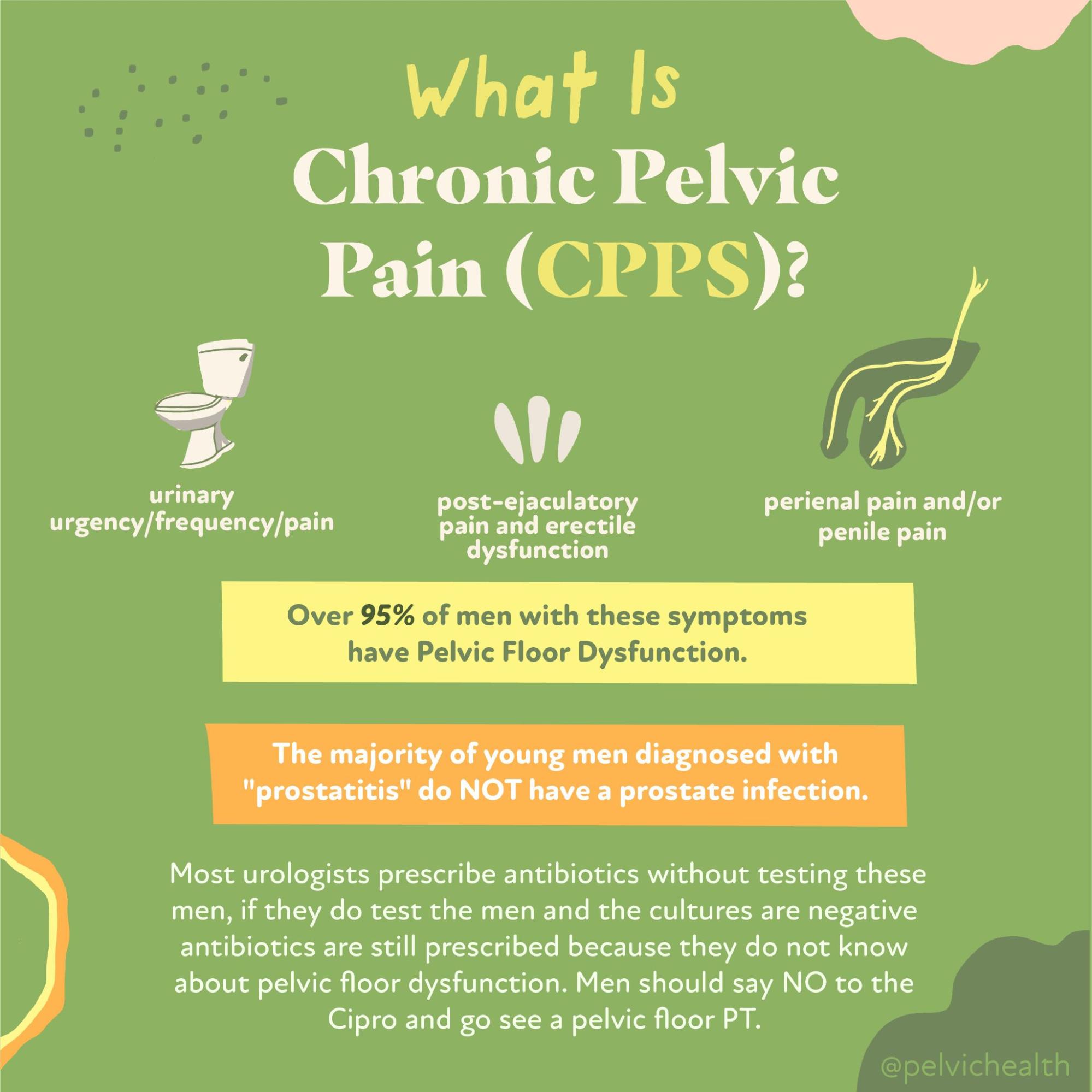
Men suffering from chronic pelvic pain often wait a long time for proper diagnosis—sometimes up to seven years. This long delay is largely due to the fact that male pelvic pain symptoms closely mirror those of prostate infections, bladder issues, or sexually transmitted diseases. In most cases, providers will prescribe antibiotics without confirming an infection through testing, as the testing process can be extensive and uncomfortable. On top of that, there’s a general lack of awareness in the medical community about male pelvic floor dysfunction. Most pelvic floor physical and occupational therapistss are also only trained to work with women. At PHRC, we’ve built our practice differently—with training and expertise that supports the needs of both men and women equally.
A significant number of men who deal with chronic pelvic discomfort are often mistakenly told they have “prostatitis” and placed on antibiotic regimens, despite having no infection. Extensive research supports that over 90% of males with pelvic or urinary symptoms do not suffer from an actual bacterial issue within the prostate. Rather, most of these individuals fit into the NIH’s classifications of Chronic Pelvic Pain Syndrome (CPPS), specifically categories IIIa and IIIb.
According to the National Institutes of Health, prostatitis-related conditions are broken down into the following five categories:
Category I: Acute bacterial prostatitis – involves abrupt, intense symptoms, including fever and bacterial urinary tract infection.
Category II: Chronic bacterial prostatitis – involves persistent bacterial infection and recurrent UTI episodes.
Category IIIa: Inflammatory CPPS – confirmed by finding white blood cells in seminal or prostatic secretions.
Category IIIb: Non-inflammatory CPPS – similar symptoms as IIIa, but without any signs of inflammation in fluid samples.
Category IV: Asymptomatic inflammatory prostatitis – presence of inflammation with no apparent symptoms or discomfort.