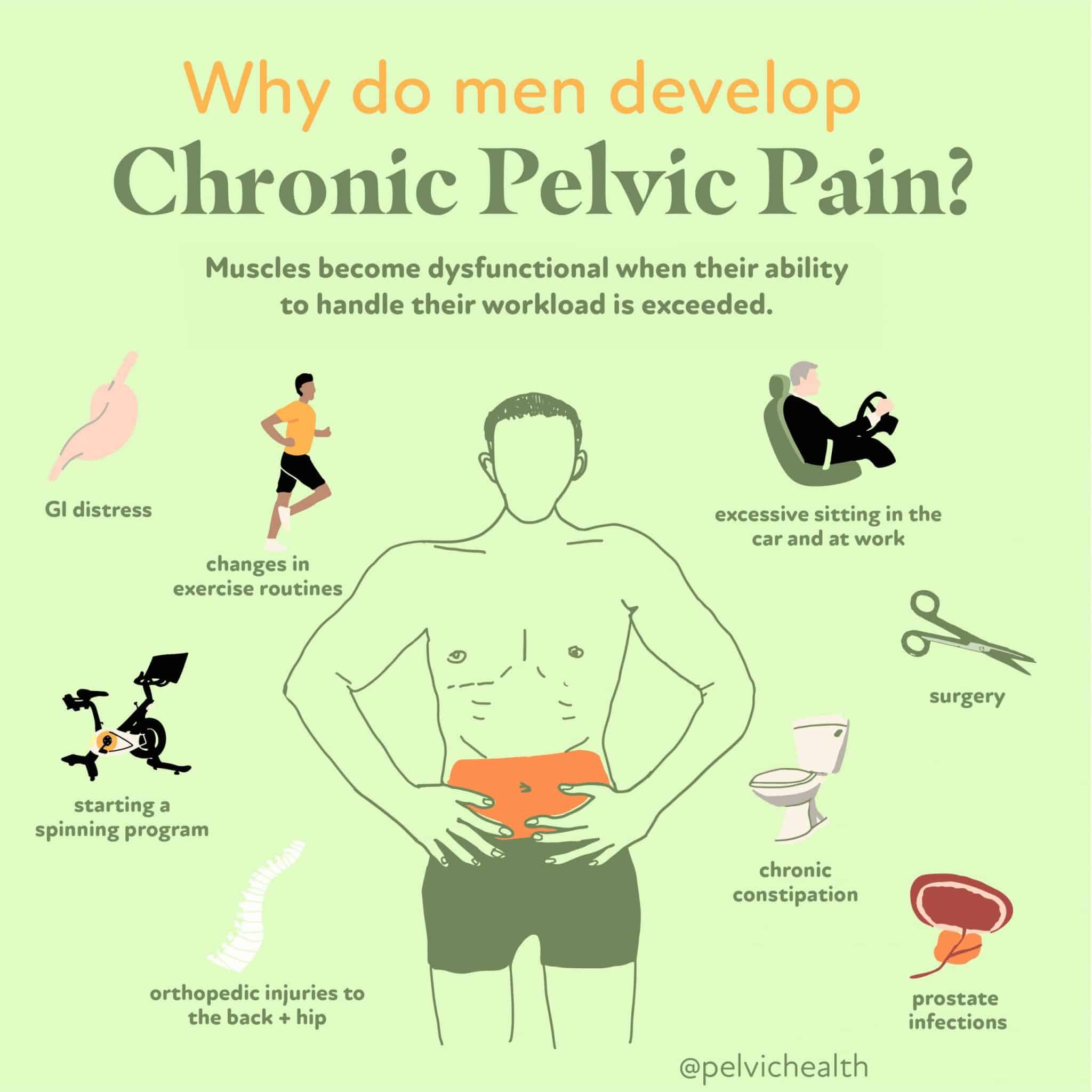
Men who experience pelvic pain often endure years of misdiagnoses—research shows that it can take up to seven years before receiving the right diagnosis. This is because their symptoms commonly overlap with those of prostate, bladder, or sexually transmitted infections. Rather than undergo the time-consuming testing process to verify these conditions, many medical providers default to prescribing antibiotics. Unfortunately, this approach can overlook the real cause: pelvic floor dysfunction. To make matters worse, few pelvic floor therapists are trained in treating men, further delaying effective treatment. At PHRC, we recognize this gap and have made it our mission to offer expert pelvic floor care tailored to men’s unique needs.
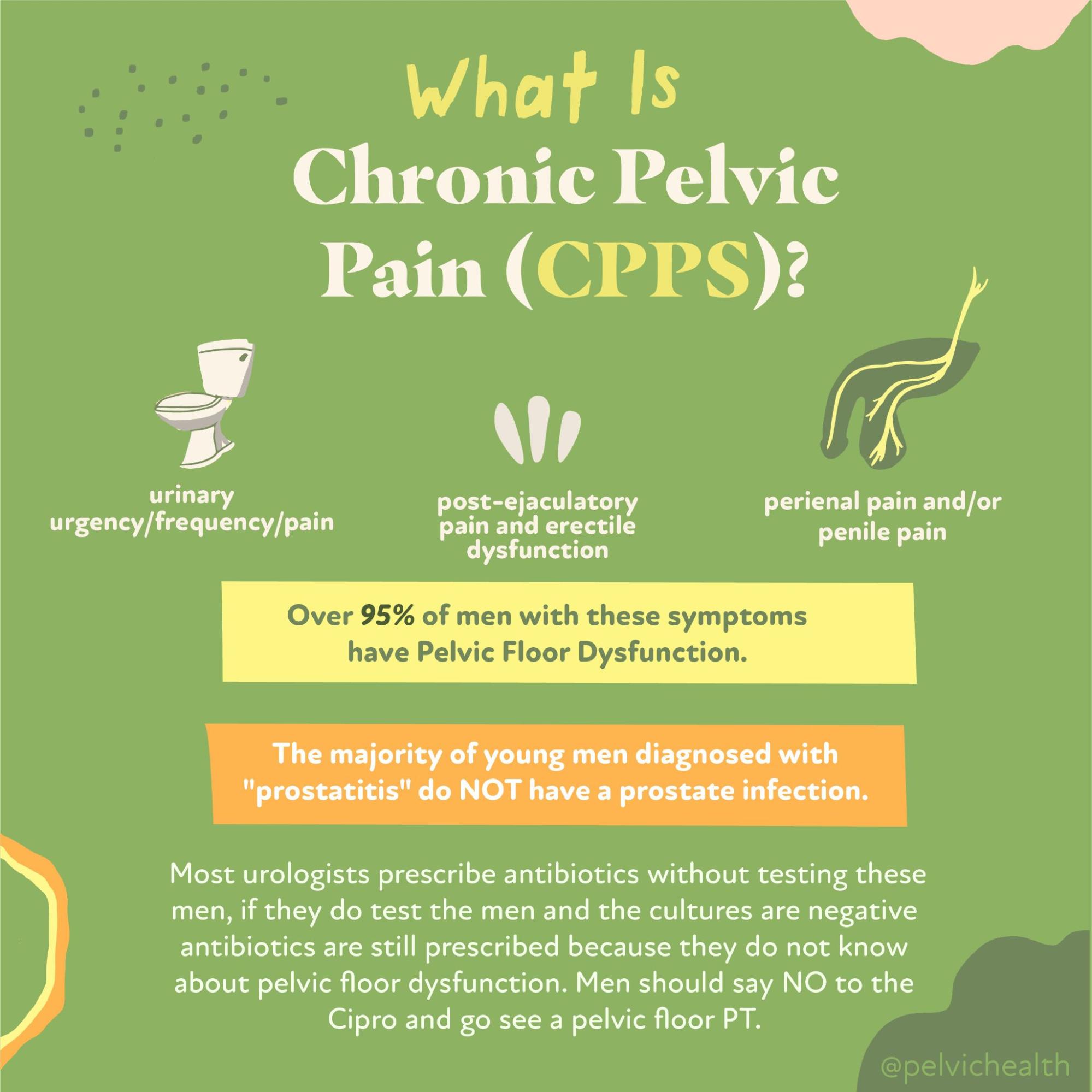
Many men living with pelvic pain are frequently misdiagnosed with “prostatitis” and are often given courses of antibiotics, even in the absence of an actual infection. However, mounting evidence has shown that more than 90% of men who report symptoms such as pelvic discomfort, urinary issues, or genital pain do not have a bacterial infection of the prostate. Instead, they typically fall under categories IIIa or IIIb of Chronic Pelvic Pain Syndrome (CPPS), as defined by the National Institutes of Health (NIH).
The NIH outlines five distinct categories of prostatitis:
Category I: Acute bacterial prostatitis – involves a sudden onset of severe urinary symptoms, often alongside fever and systemic bacterial infection.
Category II: Chronic bacterial prostatitis – marked by ongoing or recurring prostate infections, usually accompanied by repeat urinary tract infections.
Category IIIa: Inflammatory CPPS – involves chronic pain symptoms along with evidence of white blood cells in seminal fluid or expressed prostatic secretions.
Category IIIb: Non-inflammatory CPPS – presents with similar pelvic pain symptoms but without any signs of inflammation under microscopic evaluation.
Category IV: Asymptomatic inflammatory prostatitis – diagnosed when inflammation is detected in the prostate tissue despite the patient having no symptoms.