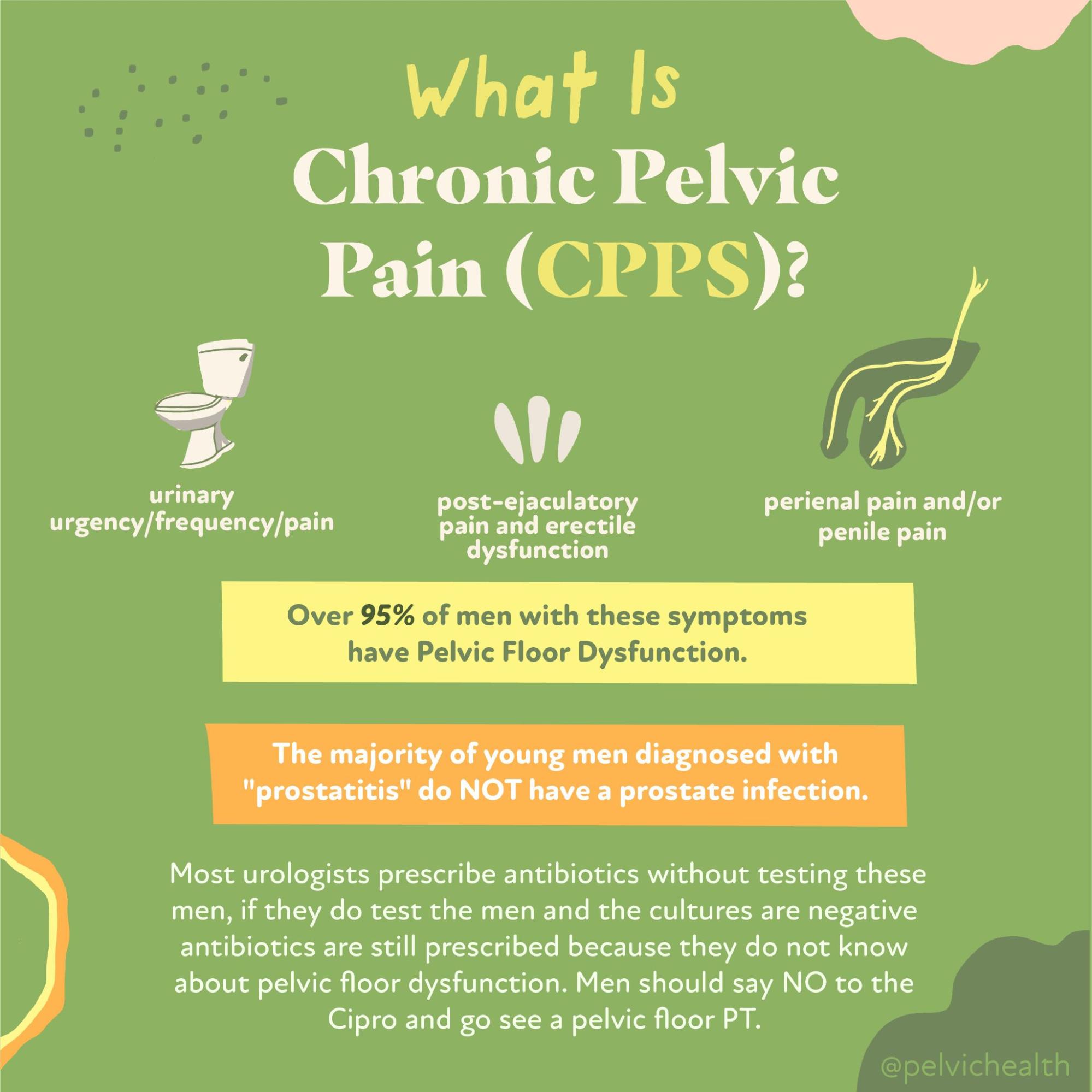
It’s not uncommon for men with pelvic pain to go undiagnosed or misdiagnosed for years—research indicates that it can take up to seven years to receive an accurate diagnosis. This delay is largely because the symptoms often resemble those of prostate conditions, bladder infections, or STIs. Rather than conduct the in-depth testing required to confirm a prostate infection, many healthcare providers choose to prescribe antibiotics preemptively. Unfortunately, this approach often misses the real issue: pelvic floor dysfunction. What makes things more complicated is that most pelvic floor therapists are primarily trained to treat women, leaving men underserved. That’s not the case at PHRC, where our team is highly experienced in treating male pelvic health—and on many days, we see more men than women.
It’s not uncommon for men with pelvic pain to be wrongly diagnosed with “prostatitis,” leading to unnecessary antibiotic treatments that fail to resolve the underlying issue. In reality, studies have demonstrated that more than 90% of males who report pain or discomfort in the genitourinary region do not have a bacterial prostate infection. Instead, these cases usually fall into categories IIIa or IIIb as defined by the National Institutes of Health (NIH), which are recognized forms of Chronic Pelvic Pain Syndrome (CPPS).
Here is how the NIH classifies prostatitis syndromes:
Category I: Acute bacterial prostatitis – characterized by severe symptoms, systemic infection, and a sudden onset of a urinary tract infection.
Category II: Chronic bacterial prostatitis – typically involves recurrent UTIs and ongoing bacterial presence in the prostate gland.
Category IIIa: Inflammatory CPPS – defined by the presence of white blood cells in semen, prostatic secretions, or urine samples.
Category IIIb: Non-inflammatory CPPS – where diagnostic samples show no evidence of white blood cells, despite ongoing symptoms.
Category IV: Asymptomatic inflammatory prostatitis – marked by inflammation found during diagnostic testing but with no outward symptoms reported by the patient.